Fencing A Sloping Block: Stepped Or Raked?
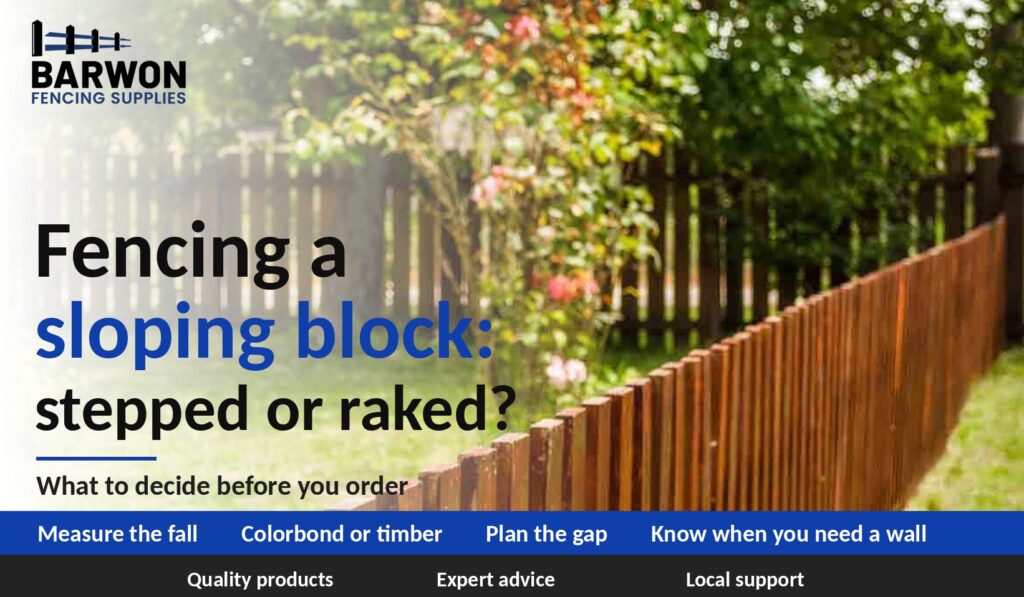
A flat block is easy to fence. You set a line, run it end to end and the top of the fence matches the ground. A sloping block asks a different question, and the answer decides what you order, how the fence looks from the street and how well it holds up.
The question is whether the fence steps down the slope in sections or follows the ground in one continuous line. Most of the problems people have with sloping fences start with not deciding that before the materials arrive.
Two ways to handle a slope
A stepped fence keeps each panel level and drops down in stages at the posts. The top of the fence looks like a staircase, and each step leaves a triangular gap beneath the panel on the downhill side. A raked fence, sometimes called a racked fence, has the panels follow the slope so the top line runs parallel to the ground.
Neither is wrong everywhere. Stepping tends to suit short runs and gentle slopes, while raking suits longer runs where a staircase of panels would look awkward. The best choice depends on the material, how steep the ground is and how the fence will be seen.
What the manufacturer says about Colorbond
BlueScope’s installation guide for Colorbond fencing favours raking. It advises taking a little extra effort to rake a fence on sloping or uneven ground rather than stepping the panels, because the result looks better and is stronger.
It also flags a practical detail that affects what you order. Where the slope is steeper than about 1 in 8, sheets may need to be cut vertically to follow the ground. Post lengths also increase to suit the conditions, which is worth knowing before you work out how many posts you need. If you are comparing the two materials in general, our earlier guide to Colorbond or timber fencing for a Geelong property covers the wider trade-offs.
How timber behaves on a slope
Timber paling fences handle slopes in a similar way. Rails can be set parallel to the ground so the palings follow the slope, or the fence can be built in level sections that step down at each post. Following the ground tends to look neater, though it means cutting rails and checking the angles more carefully.
The gap at the bottom is a common surprise. On a stepped fence, the downhill end of each section sits higher off the ground, and some people fill it with a kickboard or extra paling. Which approach works best depends on the fall of the ground and what you need the fence to do, such as keeping a dog in or a pool barrier compliant. If you are working with timber fencing, decide on the finish before you finalise quantities.
The gap under the fence
Whatever material you choose, the ground clearance matters. The Colorbond guide suggests a minimum gap of 50mm between the bottom of the rail and the ground, with drainage provided through the rail or the way it meets the post. It also warns against building up soil or garden fill against the bottom rails and posts, since that can cause corrosion.
The same principle applies to timber, where soil piled against palings keeps them damp and shortens their life. On a slope, soil naturally washes downhill and builds up against the fence, so it is worth leaving room for that.
When the slope needs a wall, not a fence
Some blocks are better described as terraced than sloping, and a fence is the wrong tool for holding soil back. The Colorbond guide states that a fence should not be used as a retaining wall. If the ground changes by more than a modest amount along the boundary, the fence and the wall are separate jobs.
Our article on concrete sleeper retaining walls explains how those systems are put together. Walls that hold back significant soil can involve engineering and council requirements, so get proper advice before you commit.
Planning around Geelong’s terrain
Parts of Greater Geelong sit on undulating land, and a boundary that looks level on a plan can fall noticeably from one end to the other. Measure the fall along the line rather than judging by eye. Take a few measurements between the highest and lowest points so you know whether the slope is steady or changes part-way along.
If you are planning in an area like Highton, it helps to walk the boundary first and note where the slope changes. Those points are natural places for posts, and they make the material list much easier to get right.
What to have ready before you order
A few details make the planning conversation faster. Bring the overall length of the boundary, the approximate drop from one end to the other, the height you want and the material you are leaning towards. Photos of the line help as well. With those, working out post lengths, panel counts and any special cuts is far more straightforward.
Also check any council rules on fence height and whether neighbours share the cost of a boundary fence. Neither question is specific to slopes, though both are easier to settle before materials are ordered.
Frequently asked questions
Is a stepped or raked fence better on a slope?
Neither is better in every case. Manufacturers such as BlueScope favour raking for Colorbond on sloping ground, while stepping can suit short runs on gentle slopes. The right choice depends on the material and how steep the ground is.
Do I need longer posts on a sloping block?
Often, yes. Post lengths can increase to suit the ground conditions, particularly where the fence is raked. Measure the fall along the boundary so you know what to ask for.
How steep is too steep for standard Colorbond panels?
BlueScope’s guide notes that sheets may need vertical slitting where the slope is steeper than 1 in 8. For steeper ground, check the manufacturer’s guidance or talk to your supplier.
What should I do about the gap under the fence?
Leave enough clearance for drainage and for soil to build up over time, and avoid piling soil against the bottom rails or palings. The Colorbond guide suggests a minimum 50mm clearance.
Can a fence hold back soil on a slope?
No. A fence is not designed to act as a retaining wall. If you need to hold soil back, that is a separate structure and may need professional advice and council approval.
Planning a fence on uneven ground?
Bring your measurements, a few photos of the boundary and an idea of the look you want, and the Barwon Fencing Supplies team can help you work out what to order for a sloping block. Get in touch before you commit to a layout so the materials suit the ground.